Catalytic oxidative dehydrogenation of alkanes

    Propene is one of the most important chemical feedstocks and building blocks of polymers. The oxidative dehydrogenation of propane (ODHP, C3H8+1/2O2→C3H6+H2O) is a promising pathway to synthesize propene, as it is an exothermic reaction with no thermodynamic limitation and prevents the frequent carbon deposition removal and catalyst regeneration that occur during the commercialized propane direct dehydrogenation process (PDH). Our aim is developing advanced heterogeneous catalyst to enable  the low-temperature efficient, selective and stable oxidative dehydrogenation of propane and other low alkanes to olefins. 

    By developing the subsurface metal promoter strategy, we managed to construct a generalizable strategy to accelerate the radical initiation activity of boron based catalysts and promotes their low temperature activity and olefin selectivity. The modulation methods and performance descriptors for these systems are also proposed.
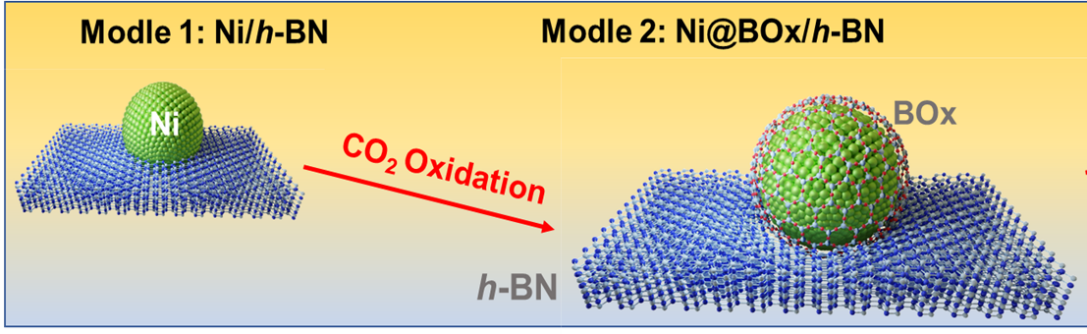
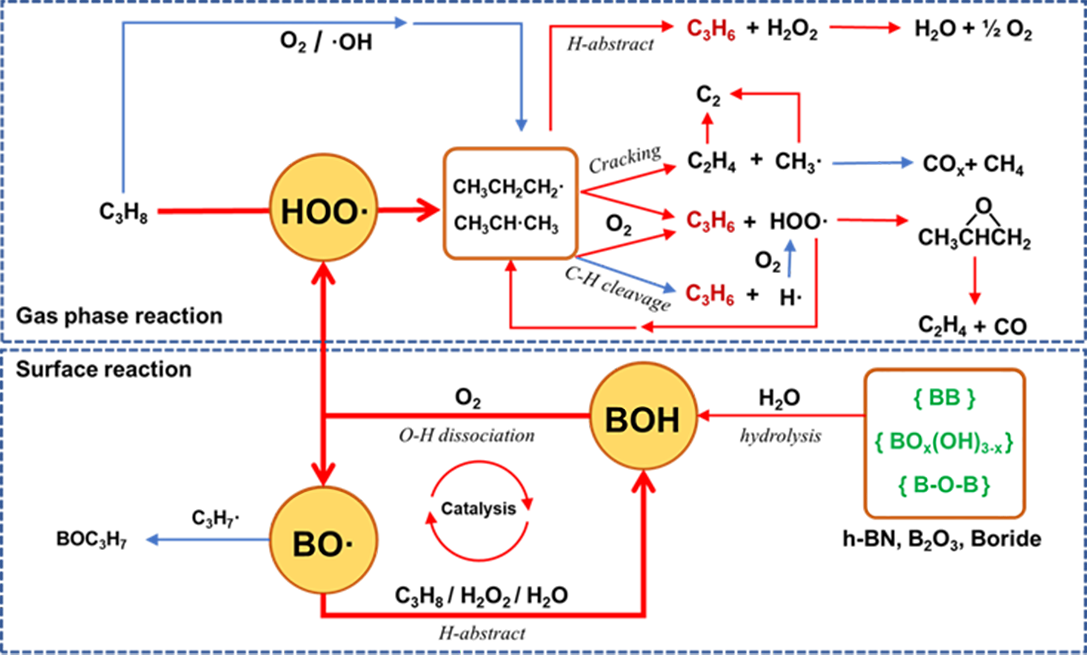
 

01.png02.png


Photocatalysis for C-H bond activation of alkane and alkane like small molecules

    Photocatalysis is a method of using light energy for chemical conversion, featuring potentials to achieve selective inert C-H bond activation under relatively mild conditions.  Using the specific activation of C-H bonds in photocatalysis to subsequently couple C-C bonds, it is possible to prepare high-value bifunctional polymer monomers from abundant and inexpensive biological compounds. This can replace petroleum-based polymer monomers and improve the source of synthetic fibers, thereby achieving the goal of economic and social sustainable development.

图片1.png


Water gas shift reaction (WGSR)

Water gas shift reaction (WGSR) is an important industrial pathway for removing impurity CO from H2 and generating additional hydrogen source. At this stage, the on-board scenario puts forward more demanding requirements on the efficiency and low-temperature activity of the low-temperature WGS catalysts. On one hand, the significant decrease in the size of on-board purification reactor and the significant increase in the operating airspeed require a significant increase in the low-temperature activity of catalysts, and on the other hand, the frequent start-stop operation of the purification reactor requires high mechanical strength and stability of the catalyst. In view of the significant advantages of molybdenum carbide materials in low-temperature water gas shift reaction, we are now exploring ways to combine the active metal with molybdenum species to produce molybdenum carbide-based low-temperature water gas shift reaction catalysts with abundant active sites and high activity and stability at low temperatures.


图片2.png


Organic liquid hydrogen storage

Hydrogen storage for stationary and mobile applications is an expanding research topic. One of the more promising hydrogen storage techniques relies on the reversibility and high selectivity of liquid organic hydrides, in particular, methylcyclohexane (MCH). The use of liquid organic hydrides in hydrogen storage also provides high gravimetric and volumetric hydrogen density, low potential risk, and low capital investment because it is largely compatible with the current transport infrastructure. Despite its technical, economical, and environmental advantages, the concept of hydrogen storage in liquid organic carriers has not been commercially established because of technical limitations related to the amount of energy required to extract the hydrogen from liquid organic hydride and the insufficient stability of the dehydrogenation catalyst. Microwave radiative heating can selectively heat the catalyst bed and improve the energy efficiency of the system. We are investigating the effective combination of a high-performance dehydrogenation active center with a wave-absorbing carrier to produce a monolithic dehydrogenation catalyst suitable for microwave heat delivery systems.


图片3.png